
Project First Light
Nine in ten want to.
Only one in seven can.
Almost everything the world spends on breastfeeding is spent after something has already gone wrong. We spend it in pregnancy, while the outcome can still be changed. Ten thousand Australian women, prepared, supported, and their outcomes measured, to build the evidence this country does not have.
Australia is small enough to prove it, and rigorous enough to trust it. What we prove here becomes the playbook for the world.
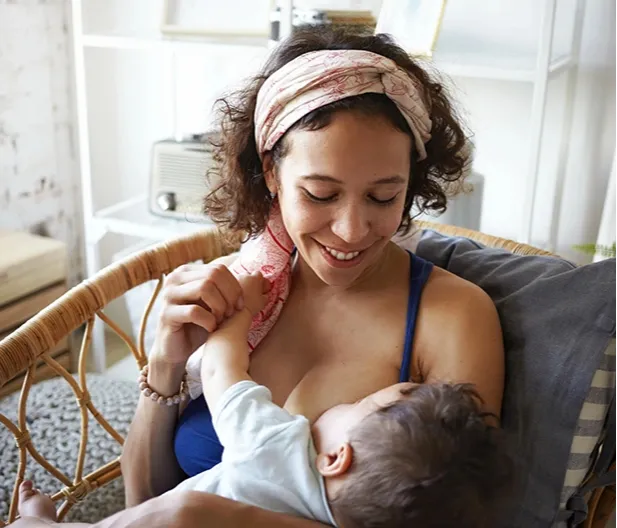
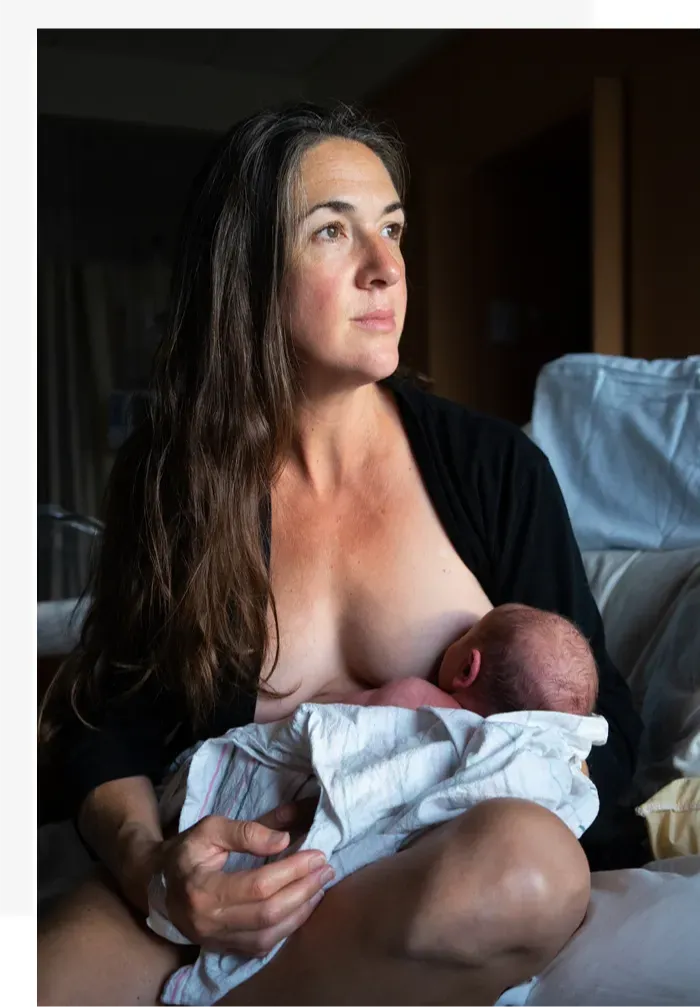
Every one of these women intended to breastfeed.
More than 9 in 10 Australian women start breastfeeding in hospital. Barely 1 in 7 are still exclusively breastfeeding at five months. The distance between those two numbers is not a matter of choice. It is a matter of support, and of when that support arrives.
Source: 2010 Australian National Infant Feeding Survey, the only dedicated national survey Australia has ever run. Sixteen years later, it has never been repeated.
Why the gap exists
The system is built for crisis, not prevention.
The hospital system
Crisis management
- Mothers trust a system that has no time for them
- Women go home with nipple pain, and readmissions keep rising
- Midwives are stretched thinner every year
The Thompson Method
Prevention and support
- She prepares in pregnancy, before problems start
- She is supported in the hours that matter
- She is far more likely to go home confident and pain-free
There will never be enough lactation consultants on earth to fix breastfeeding one crisis at a time.
Where it begins
The 3 Golden Hours™
A healthy newborn needs to feed leisurely for roughly two to three hours after birth. Dr Robyn Thompson named these The 3 Golden Hours™. Anything that intervenes in them, interrupts them or delays them raises the risk of nipple trauma, and nipple trauma is where most breastfeeding journeys quietly end.
In Dr Robyn's PhD research, 46% of babies had received formula before discharge. Not at week three, when the mother finally asks for help. In hour one, when nobody was watching for it.
“I did this program before bub arrived, and it took the stress and worry completely away.”Becky P., February 2025
The goal
Ten thousand women, prepared and measured.
Ten thousand pregnant Australian women, prepared by The Thompson Method, and carried through the first 1,000 days by My Milk Map. Those who choose to take part in the research also contribute to the Infant Feeding Index, building the first live longitudinal maternal health dataset. Real world evidence. No woman will be enrolled in the research until ethics approval is granted.
Two separate choices. Every woman receives the full program. Whether she also contributes her de-identified data to the Index is a decision she makes for herself, and she can decline, or change her mind later, without losing anything. That is what ethics approval will require of us, and it is what we would do anyway.
Nothing identifiable ever leaves. No woman's health information is shared. What the Index publishes is de-identified and aggregated across the whole cohort, so no individual mother can be picked out of it, and no mother is ever compared to another.
The Thompson Method
Prevention, breastfeeding preparation taught in pregnancy, before problems begin. One hundred thousand women have already been through it.
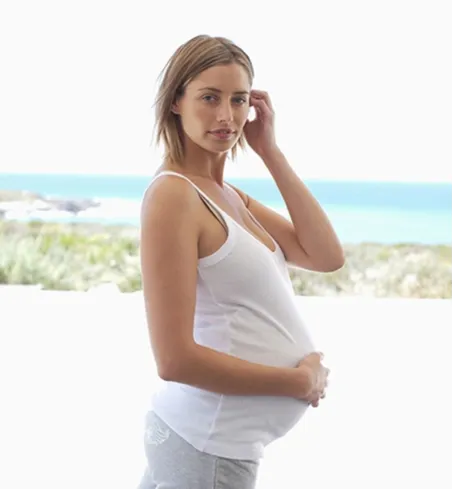
My Milk Map
Her digital companion during pregnancy, up to the first 1,000 days, backed by our team of midwives, IBCLCs and educators, with support when she needs it.
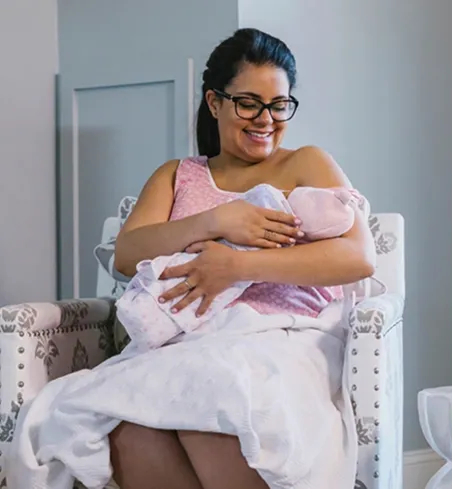
The Infant Feeding Index
De-identified and aggregated, never an individual mother. The picture Australia currently cannot see, and the playbook for the rest of the world.
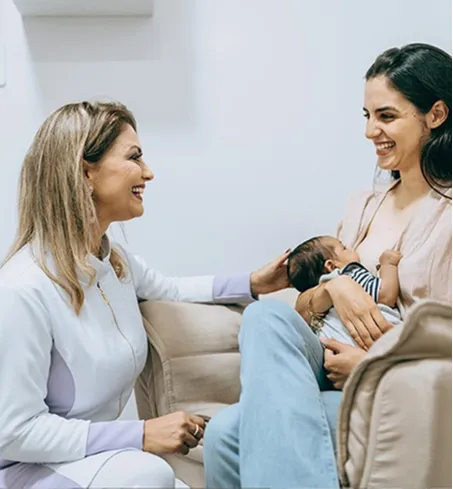
What your contribution does
A$100 brings one woman into the cohort.
The goal is ten thousand women. The funding is how we reach it.
The direct return
Your contribution funds places in the cohort, and their outcomes are measured through the Infant Feeding Index and reported back to you. You can follow your money from the gift, to the women, to what the evidence shows. Very little philanthropy can be traced that precisely, because almost nothing that gets funded also measures itself.
The systemic return
The same ten thousand women generate the population-level evidence Australia does not have. That evidence is what governments, health insurers and health systems need before they will fund prevention at scale. You are not only bringing women in, you are funding the proof that makes this model fundable everywhere else.
What we are not promising. We cannot promise any individual woman a particular result, and we will not pretend otherwise. What we can promise is that every woman has the opportunity to be prepared before birth and supported through the first 1,000 days, and that we will measure what actually happens and publish it, whatever it shows.
Why the money is needed
Everything is built. Ready to be proven at scale.
The method exists. The platform exists. The team exists.
The capital will be used to enrol ten thousand women over six months, under one protocol, and run it as a study. It funds the research layer that makes that possible: the ethics approval, the consent and privacy infrastructure, and the statisticians who design the analysis before the data arrives and interpret it once it does. Recruited together and measured on the same terms, ten thousand journeys become evidence.
It also shapes who takes part. Funding lets us recruit deliberately into the communities where breastfeeding rates are lowest, and fund places for women who could not otherwise take part.
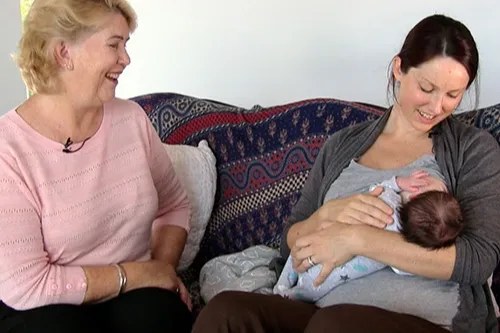
Why us
Fifty years of work, already done.
Dr Robyn Thompson PhD OAM was a midwife for fifty years, twenty-five inside the hospital system and twenty-five outside it. She was observing breastfeeding complications with the women being discharged from hospital that she was not observing with the women in her care who gave birth at home.
She asked, “Why are so many women experiencing painful nipple trauma in the early postnatal period, on discharge from hospital?” This question became the basis of her PhD research, which was awarded to her at the age of 70.
She received the Medal of the Order of Australia in the 2023 King's Birthday Honours, for service to medicine, particularly as a midwife and breastfeeding specialist. She died in 2025, and her daughter Joanne now carries the work forward as Custodian.
Her own research
A PhD thesis, and a peer-reviewed study in Women and Birth (2016) identifying predictors of nipple trauma.
Independent research
A multi-method study of the Thompson Method at Mater Mothers' Hospital, published in the International Journal of Nursing Studies (2023).
Our own members
83% of 500 surveyed members told us they achieved their breastfeeding goals. Self-reported, and held separately from the peer-reviewed evidence.
The question we get asked most
How can you be trusted to measure your own work?
You should ask this. We ask ourselves.
- Ethics approval sits outside us. The design, the consent process and the data handling will be reviewed by an independent human research ethics committee before a single woman is enrolled. If the committee requires changes, we will make them and we will tell you what they were.
- Taking part is her choice, every step. Consent to contribute data is separate from receiving the program, it is freely given, and it can be withdrawn.
- We cannot curate the outcome. What leaves the Index is de-identified and aggregated. No woman's health information is shared, individuals are never the unit of analysis, and no mother is ever compared to another.
- Our existing evidence was produced by others. We did not run the Mater Mothers' study and we do not control it.
- We will pre-specify the analysis and publish whatever it shows, including findings that do not favour us. An instrument nobody trusts is worth nothing, including to us.
From the women who have been through it
One hundred thousand journeys, so far.
“With the help of the Thompson Method, I had such a beautiful and smooth start to breastfeeding. After 24 months and 3 weeks, our breastfeeding journey has finally come to an end. My heart feels full, emotional, and proud all at once.”
Rxy T., June 2026“Since using The Thompson Method our feeding transformed and I couldn't be more thankful.”
Brooke S., November 2024“I ended up having a beautiful breastfeeding experience with my second, and I am so grateful.”
Melody W., February 2025Straight answers
Questions we are asked.
Is this an investment?
No. There is no equity, no promised return and no financial product being offered. This is a contribution to a defined outcome.
Do the women in the cohort pay anything?
Yes. Participants make a small monthly contribution towards the program. Our experience is that this is what drives the engagement a longitudinal study depends on, and a cohort that does not participate produces no data. Contributions fund what the fee does not: recruitment, ethics and data governance, the research layer, and places for women who could not otherwise take part.
Has the study been through ethics approval?
Not yet. The protocol and the statistical analysis plan are being prepared now, and the application will go to an independent human research ethics committee before anyone is enrolled in the research. No research data will be collected until approval is granted. If the committee requires changes to the design, we will make them and report what changed.
Do all ten thousand women have to give their data?
No. Every woman receives the full program regardless. Contributing her de-identified data to the Infant Feeding Index is a separate choice, freely given, and she can decline or withdraw at any point without losing anything. That is what ethics approval will require. It also means the research cohort may be smaller than ten thousand, and we would rather tell you that now than surprise you later.
Is any woman's health information shared?
No. Nothing identifiable ever leaves the Index. What is published or licensed is de-identified and aggregated across the cohort, so no individual mother can be picked out of it. Individuals are never the unit of analysis.
Who owns the data, and is it sold?
The Infant Feeding Index is held by The Thompson Method Group. Individual data is never shared. What is licensed is cohort-level, de-identified, consent-based evidence, and pharmaceutical companies are excluded by design.
Can I contribute without being named?
Yes, at any level. The women still come into the cohort, the evidence is still built, and nothing appears anywhere with your name on it.
What happens if you do not raise the full amount?
The cohort begins either way. What is contributed decides how quickly we recruit and how many women we can bring in.
Can I contribute from outside Australia?
Yes. Contributions are in Australian dollars and the cohort is Australian, but what we prove here is meant to travel.
Dr Robyn built the solution. The world is waiting.
Her method has already been experienced by one hundred thousand women. Project First Light is the first time it will be delivered and measured at the same time.
Prefer to talk it through first? Most people do.